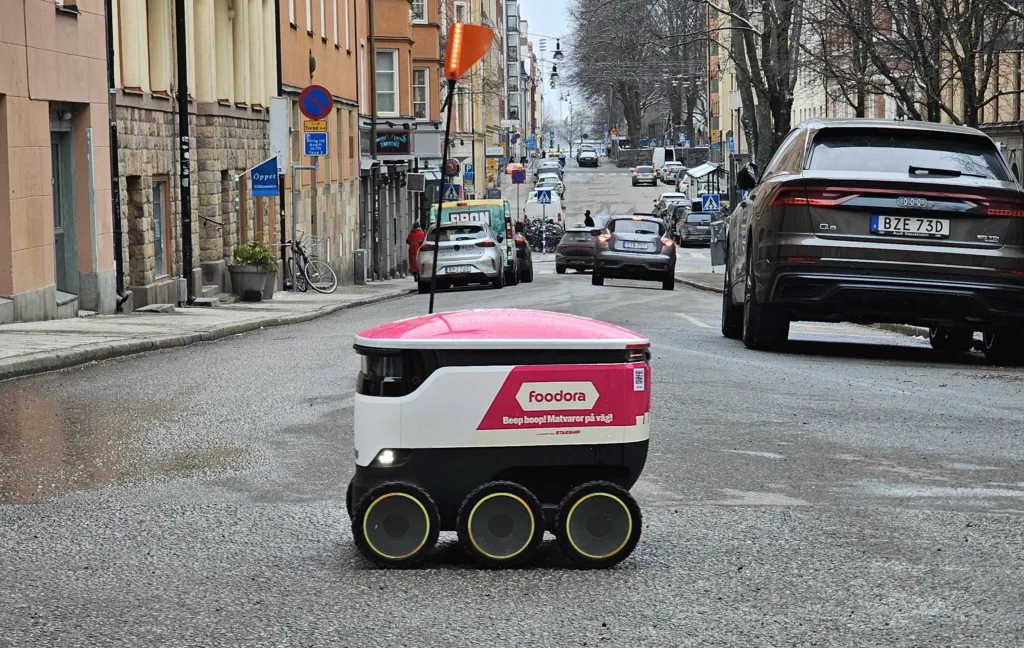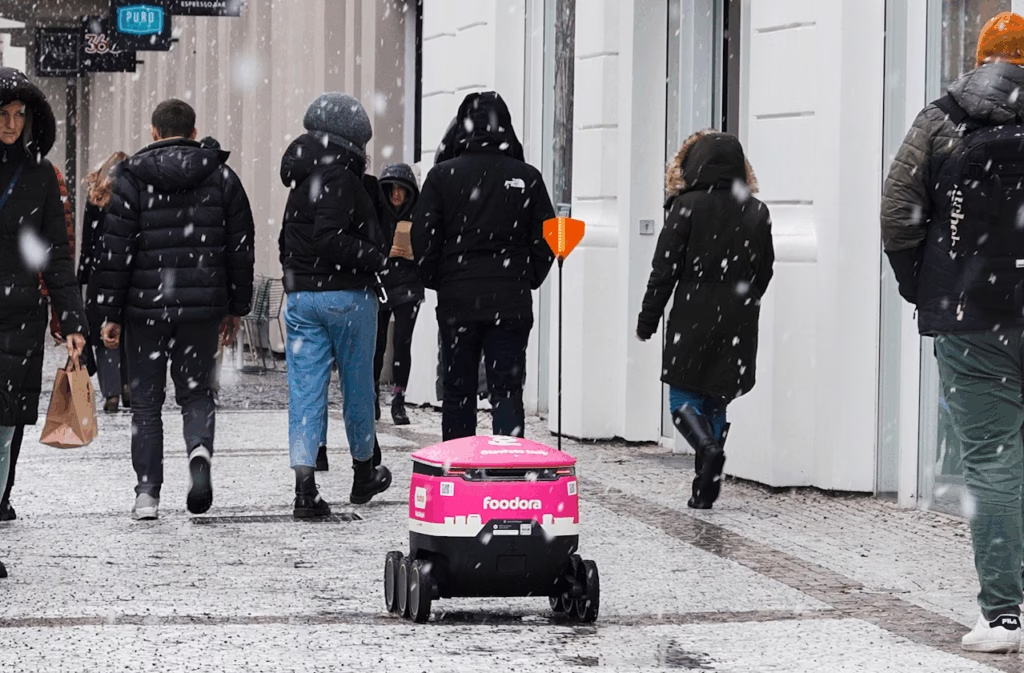
Prague, Czechia – December 2, 2025, is entering the era of autonomous delivery. foodora, one of the leading delivery platforms in Czechia, is launching a pilot project in Prague 8 to deliver hot food and grocery orders using robots. The project was developed in cooperation with Starship Technologies, the world’s leading provider of autonomous delivery services.
Following a successful operational rollout in Sweden, foodora’s robotic delivery now makes its debut in Central Europe. If the pilot operation in Prague proves successful, there are plans to expand it to other Czech cities and regions. “We are the first company in Czechia to involve autonomous robots into our delivery network,” says Adam Kolesa, Managing Director of foodora Czechia. “The cooperation with Starship Technologies allows us to offer customers an alternative delivery method that is more sustainable,” he adds.
Indeed, robotic delivery is also expected to bring an environmental benefit. The vehicles are fully electric, and according to data from Starship Technologies, their operation in Europe has already saved more than 700 tonnes of CO₂ emissions. Each delivery consumes only about as much energy as it takes to boil a kettle for a cup of tea . In the long term it means less emissions with fewer cars in the streets.
“We’re proud to be partnering with foodora to launch in Czechia today. Our friendly robots have already transformed the way people shop in many countries around the world, and now residents in Prague can experience the same convenience, speed and reliability with food delivered on-demand, in minutes,” says Ahti Heinla, Co-founder and CEO of Starship Technologies.
The First Robots Hit the Streets of Prague 8
Three robots will be deployed in Prague 8 as part of the testing phase. The robots will deliver orders from McDonald’s Karlín within a radius of around 2 km as a start. “At McDonald’s, we are constantly looking for innovative ways to enhance our customers’ experience, whether they dine in our restaurants or enjoy their meals elsewhere. Testing food delivery using a robot in cooperation with foodora is another step toward modern and sustainable solutions. We believe this technology will bring convenience and speed to customers in Karlín and the surrounding area – and soon in other locations as well,” said Martin Troup, Marketing Director of McDonald’s for the Czech Republic, Slovakia, and Ukraine.
“This is the first time ground robots at foodora will be delivering hot meals and not just groceries. For us, this is a major step forward in food delivery and another milestone in the development of our services,” says Kolesa.
How do the robots actually work?
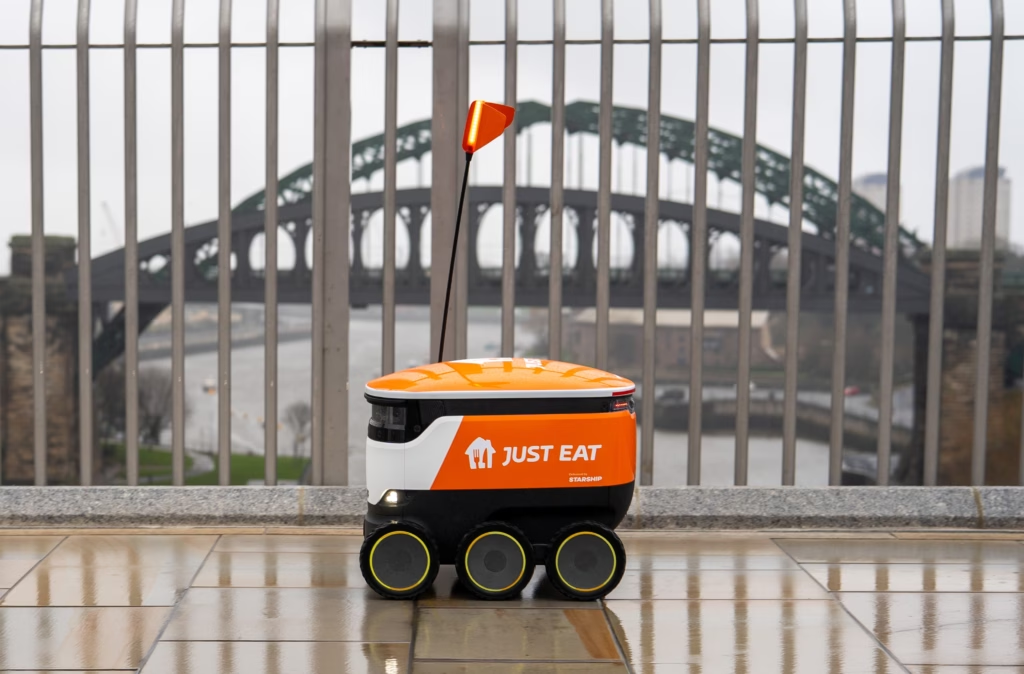
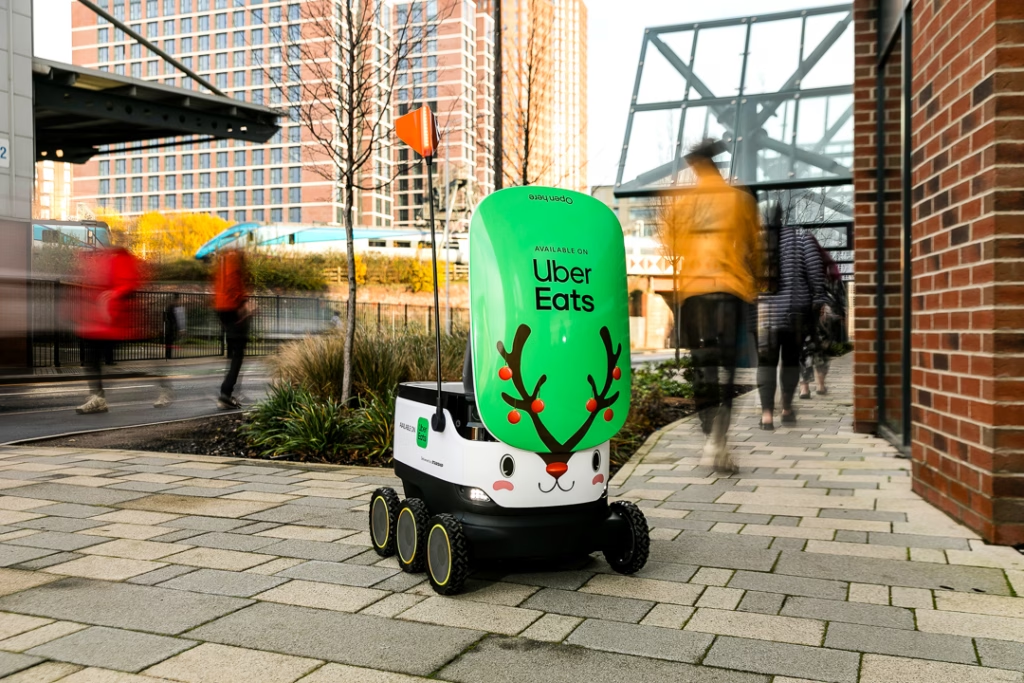
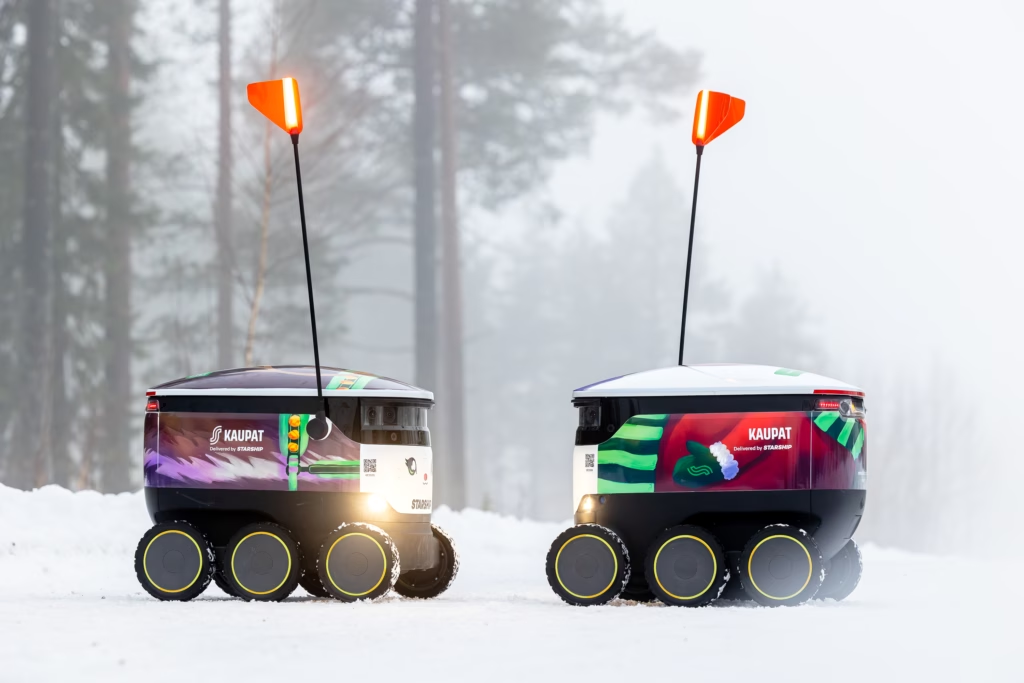
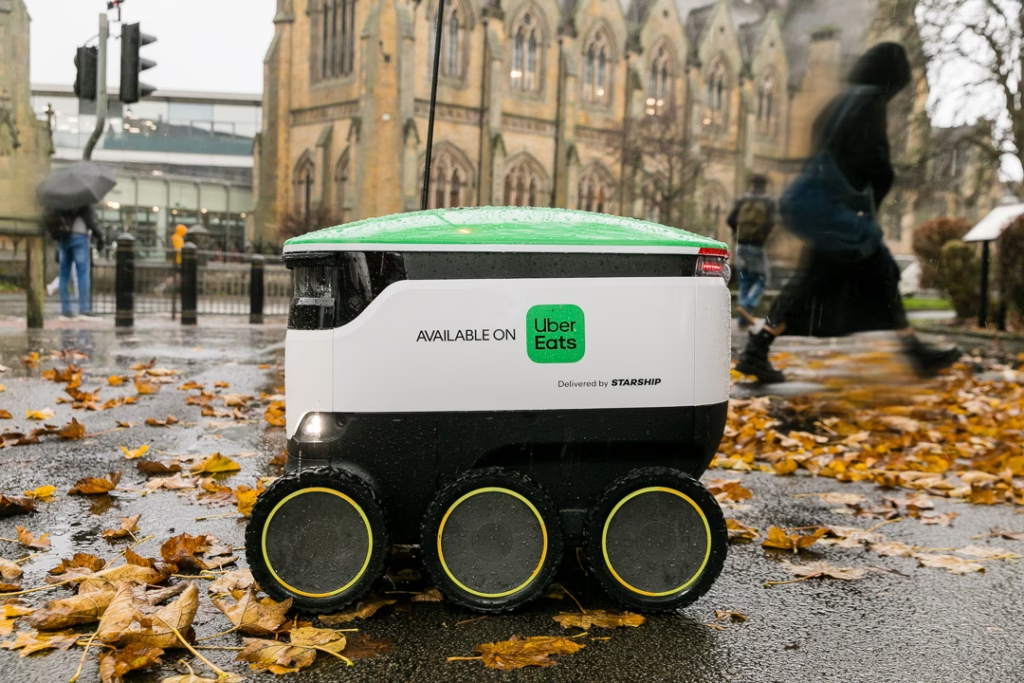
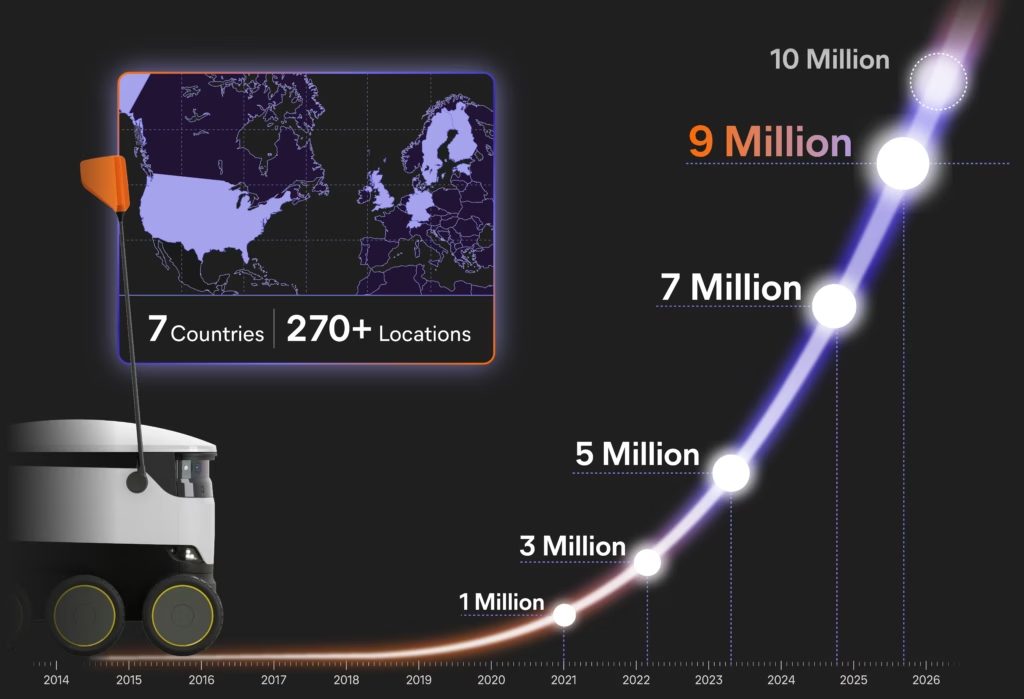
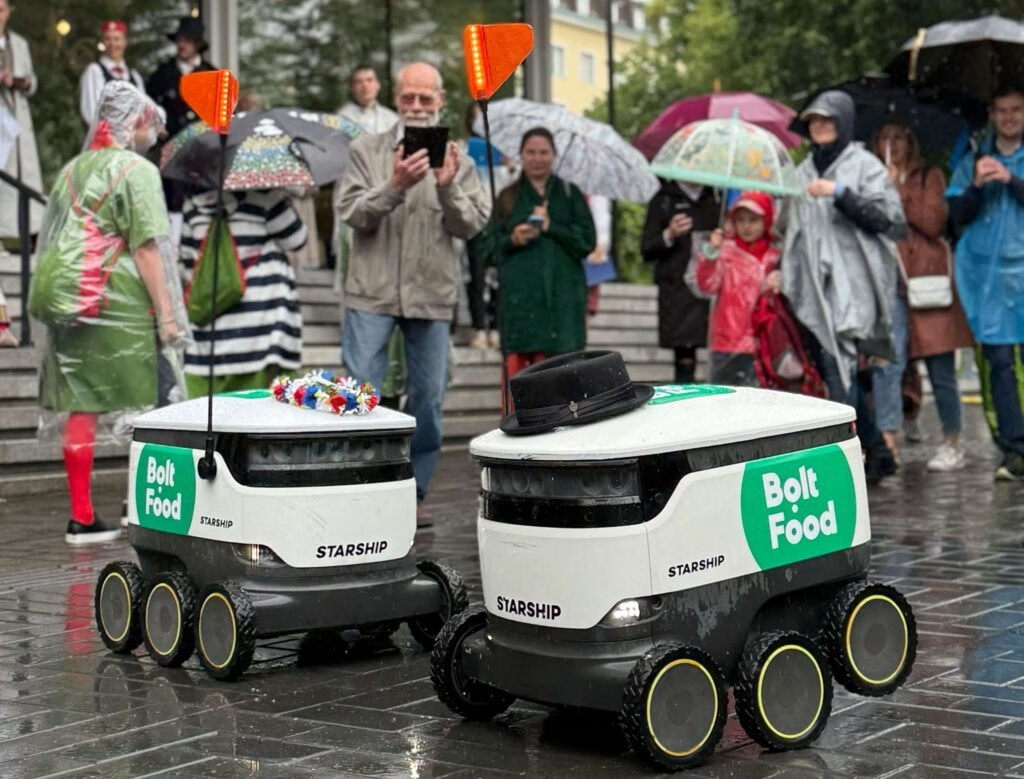
The robots move mainly on sidewalks at walking speed and cross roads when they need to, using pedestrian crossings. They use a combination of multiple sensors and cameras, artificial intelligence and machine learning to travel and navigate around obstacles, while computer vision helps the robots to map their environment to the nearest inch. They are capable of operating virtually non-stop and can handle operation even in challenging conditions – delivering without trouble in the rain, snow, or during hot summer heat. “Starship technology has been proven over years of operation. Our robots safely make over 125,000 road crossings every day and have already completed more than 9 million deliveries worldwide” says Ahti Heinla, CEO of Starship Technologies.
The robots operate at Level 4 autonomy – which means they move independently, but under the constant supervision of a human assistant who can intervene immediately if necessary. “If a robot encounters an unexpected obstacle, such as a construction site, or finds itself in a situation it cannot evaluate on its own, the human assistant can log in and help the robot navigate the situation. In practice, we combine the advantages of artificial intelligence with human oversight, which ensures maximum safety and reliability,” explains Heinla.
foodora has long bet on innovation and is already proving that success lies in a combination of human work and technology. “The goal of deploying autonomous robots is to complement the work of riders and help with simple and short orders while they can focus on longer routes. Robots also support our goal to improve road safety, easing road traffic congestion and lowering the risk of accidents,” comments Dirbák.
Cooperation with Cities and Operational Safety
The first city to support the project is Prague – specifically, the municipal district of Prague 8. Future plans include expansion to other districts and cities, with initial negotiations already underway. “We always deploy new technologies in close cooperation with them. We want the service to operate in compliance with local rules and to bring benefits to both our customers and local communities,” adds Dirbák.
The Mayor of Prague 8, Ondřej Gros says: “We see the autonomous robot delivery project as an innovative solution that can enhance our residents’ quality of life while promoting sustainable urban transport. Having such tests running in our area demonstrates how modern technology can improve city logistics without adding strain to traffic or the environment.”
Czechia Among European Innovators
By launching the project, Czechia ranks among the European pioneers of modern urban logistics. foodora thus confirms its position as one the biggest innovators in the delivery platforms market. “The ways in which we move, shop, and live in cities are changing every day, and we want to be part of that. Robotic delivery is a logical step forward,” comments Dirbák.
“With the support and global experience of Starship Technologies and the support of local communities and municipalities, we want to show that Czechia can be at the forefront of innovation and that private actors like foodora can bring modern technology to its citizens, improving their lives for the better,” concludes Kolesa.
Facts about Starship’s robots
- Starship’s fleet of 2700+ robots operates across 270+ locations in seven countries covering the US, Finland, Sweden, Switzerland, Germany, Estonia and the UK.
- The robots have completed over 9 million deliveries worldwide.
- Operating at Level 4 autonomy, they are mostly autonomous while being monitored by humans who can assist them at any time.
- They cross 125,000 roads and driveways per day – that’s ~ 2 crossings per second
- The robots are fully electric. The average Starship delivery consumes about the same amount of energy as boiling a kettle to make a cup of coffee.
- So far, Starship robots have saved over 700 tonnes of CO2 entering the atmosphere in Europe by providing a battery-powered alternative to jumping in the car to collect food and groceries.
About foodora:
foodora is an online food delivery platform that provides its services in more than 170 cities and municipalities across the entire Czech Republic. The foodora brand, previously known as Dáme jídlo, has been operating on the Czech market since 2012. With coverage of over 70% of the Czech population, it is the largest q-commerce platform in the country. Since 2021, users have also been able to have other goods delivered within 30 minutes, such as groceries, gifts, flowers, cosmetics, and even small electronics – whether from foodora MARKET or partner stores. foodora brings new customers to its thousands of partner restaurants and shops and helps them with the correct setting up of their business in the online space. The company is part of Delivery Hero SE, the world’s leading local delivery platform. You can find out more about the company and the q-commerce sector at https://press.foodora.cz/.
About Starship Technologies:
Starship Technologies is revolutionising delivery services with autonomous robots. The robots are designed to deliver food, groceries and packages locally within minutes. Starship delivery robots have travelled over 20 million kilometres and made more than 9 million autonomous deliveries around the world. Starship was founded by Ahti Heinla (chief architect of Skype) and Janus Friis (co-founder of Skype). Ahti Heinla is also the CEO of Starship.